
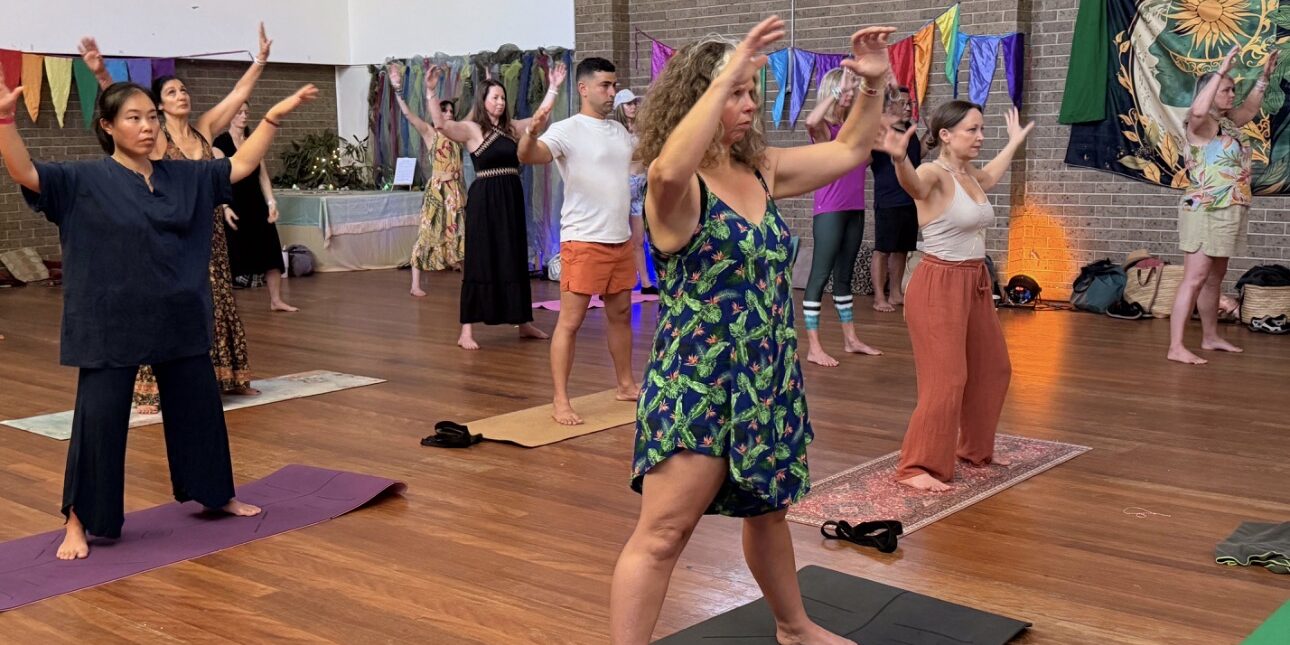
Qigong is a wonderful way to support your health and wellbeing, but did you know that not all Qigong practices involve the same types of movement?
Whether you’re managing an old injury, experiencing joint stiffness or simply noticing changes in your mobility as you get older, choosing the right Qigong practice can make all the difference to your experience.
What is Qigong?
Qigong (pronounced chee-gong) is a traditional Chinese mind-body practice that combines gentle movement, breathing and mindful awareness. Practised for centuries, it offers a time and tested way to cultivate balance, coordination, flexibility and relaxation while supporting physical and emotional wellbeing.
One of the wonderful things about Qigong is its diversity. There are over 3000 forms, each with its own movements, rhythm and physical demands.
Not All Qigong Forms Are the Same
Adam Wiltshire teaches a variety of Qigong forms throughout the year, ranging from gentle, flowing sequences to more dynamic practices involving deeper stretches and a greater range of movement.
Gentler forms are often well suited to people experiencing stiffness, reduced mobility or certain physical limitations. These practices typically involve slower, smaller movements that can be adapted to accommodate individual needs. They offer an opportunity to move comfortably, develop body awareness and gradually build confidence.
More dynamic forms, however, can place different demands on the body. Some incorporate deeper stretches, spinal twists, forward bending, turning movements and changes in posture that require greater mobility through the knees, hips, ankles, shoulders, back and neck.
While these movements can be enjoyable and beneficial for some participants, they may be less suitable for others managing injuries, joint problems or significant movement restrictions.
Working With Your Body, Not Against It
An important principle of Qigong is learning to listen to your body rather than forcing movement beyond what feels comfortable.
Although many movements can be modified, some forms are less easily adapted without substantially changing the practice. This is why it’s important to consider the particular form being taught, rather than assuming all Qigong classes will be equally suitable.
Our aim is to help you enjoy the benefits of Qigong while practising in a way that respects your body’s individual needs and limitations.
A Quick Conversation Before Booking
Because Adam introduces different Qigong forms each term, we encourage anyone with an existing injury, joint concerns or movement restrictions to check with us before enrolling in each new term, even if you’ve attended classes previously.
A brief conversation can help us understand your needs, explain the movements involved and determine whether the upcoming practice is likely to be a good fit. Where appropriate, we may also recommend checking with your physiotherapist or healthcare professional.
Qigong is about cultivating greater harmony between body and mind. Finding a practice that suits you is an important part of that journey.
If you’re unsure whether an upcoming term is suitable, please get in touch with the Adam Wiltshire before booking. He’s always happy to help you make an informed choice. You can reach him by email at adam@dragonflyqigong.com or by phone on 0419469211.
![]](https://dragonflyqigong.com/wp-content/uploads/bb-plugin/cache/unnamed-file-panorama-e3d712d6b4a0453cd2ba85097d17c43d-.jpg "]")


